
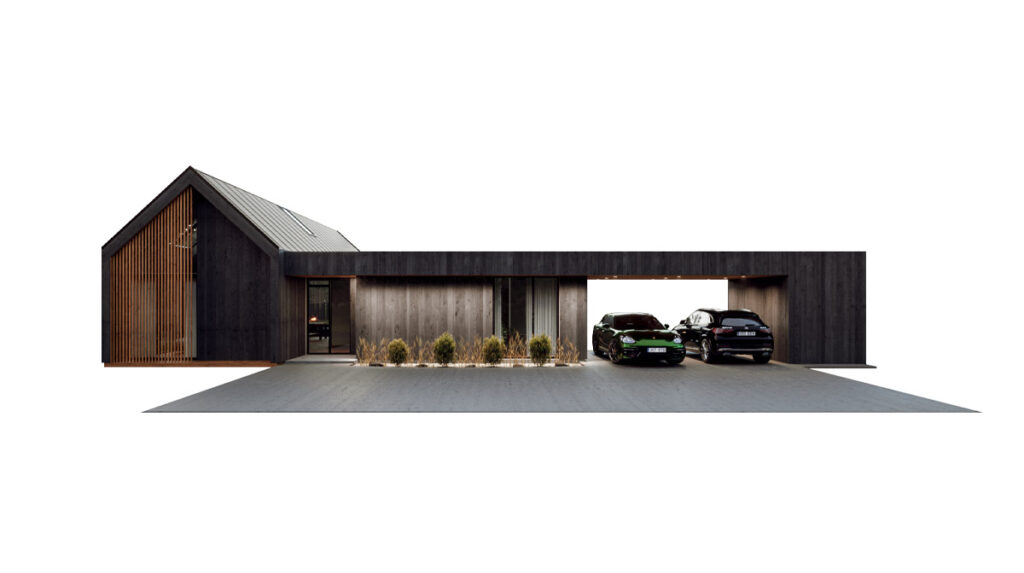


Timber house lifespan comes up in every masonry-versus-timber debate, usually answered by gut feeling. Some say a timber house lasts a couple of decades, others point to century-old farmhouses. Both are partly right: the answer depends not on the material but on how the house is built and whether it stays dry.
Below are five answers about timber house lifespan. The guarantee figures are Happy Home’s own promises, and the material properties come from the known characteristics of cross-laminated timber.
1. How long a timber house really lasts
Estonia’s oldest dwellings are timber and have stood for more than a hundred years, not because old timber was better, but because they have had a sound roof, a raised foundation and heating and ventilation inside. Timber does not decay by itself: rot and mould need persistent moisture, so when timber stays dry, timber house lifespan is practically unlimited.
The same applies to a modern CLT house. Cross-laminated timber keeps its dimensions as humidity changes thanks to its cross-glued layers, and it carries load as a solid panel rather than as thin parts. When the structure is protected from water from above, below and inside, it lasts no shorter than a masonry house, which we compare in our article on a masonry or timber house.
2. What shortens the lifespan of a timber house
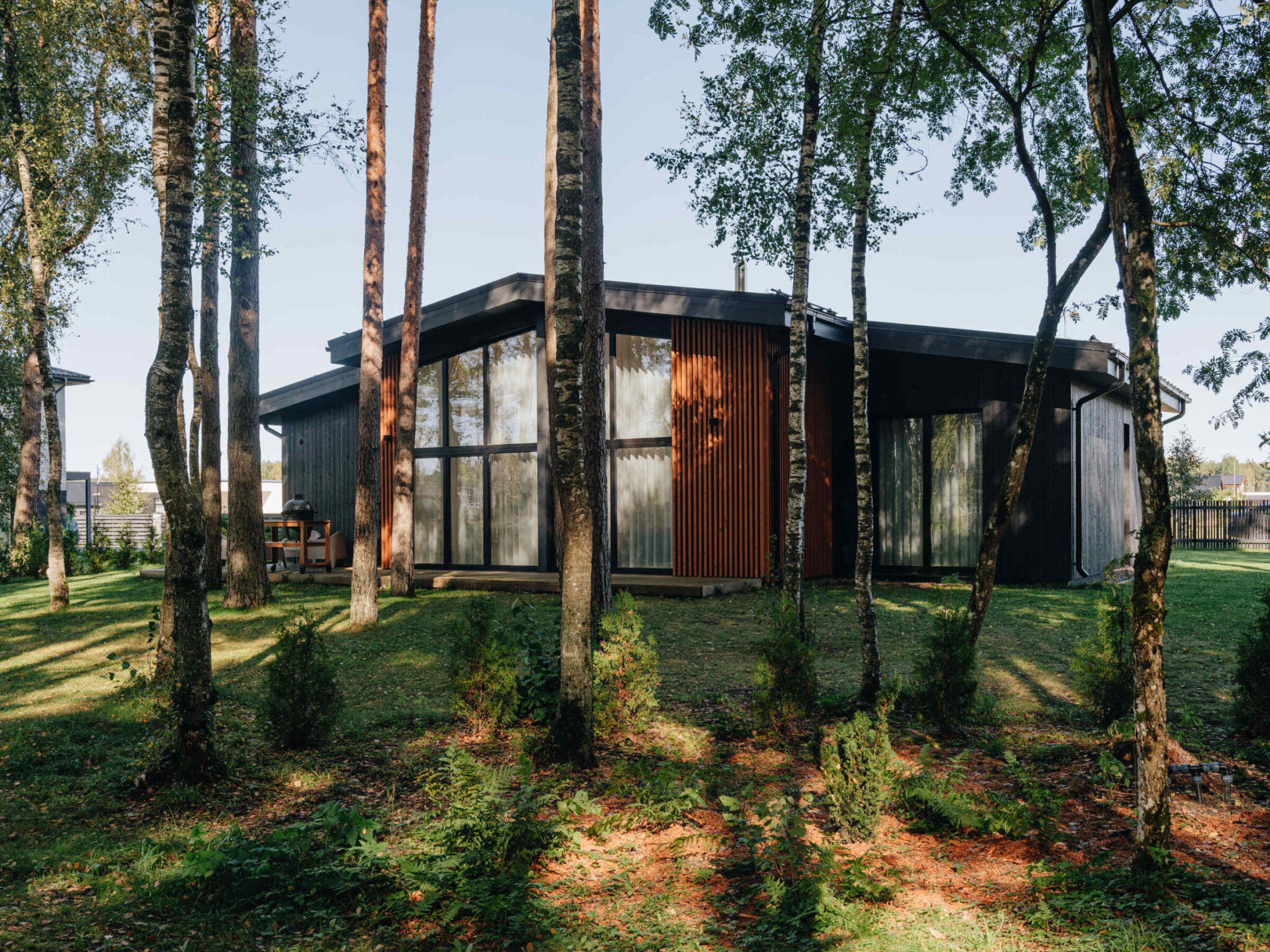
One thing always shortens timber house lifespan: moisture that stays in the structure. It reaches the house in five ways: from the ground, when the foundation perimeter is wet and there is no drainage; from the roof, when the covering or the penetrations leak; from inside, when humid indoor air enters the wall and condenses on a cold surface; from construction, when wet material is sealed into the structure; and from leaking pipes that nobody notices.
All five are preventable. The danger is not timber but a solution where moisture gets in and cannot get out: a hollow frame without a wind barrier, a low foundation without drainage, a leaking roof nobody checks. In such a house the lifespan is short whether the wall is timber or stone. A windy, salty, permanently damp plot raises the demands on the same details, which is why we treat them separately when building a house near the sea.
3. How a CLT house is built to last
A Happy Home house is designed so that the five paths of moisture are closed, and that design is what turns timber house lifespan from a hope into a calculation. The foundation and drainage keep ground moisture away from the structure. The shell is erected in about a week and closed immediately with the roof, windows and doors, so construction moisture does not stay in the panels. The wall layers are logical: the load-bearing CLT panel on the warm, dry side, PIR insulation that does not absorb water, a wind barrier and a ventilation gap behind the facade.
How the two common insulation materials behave when they do get wet is compared in our article on PIR insulation or mineral wool.
From inside, airtightness protects the structure. The measured air leakage rate of our houses has stayed between 0.13 and 0.35, which means humid indoor air does not move through the wall and does not condense in the structure. Heat-recovery ventilation takes the humid air out of the house in a controlled way. The technical solutions are on the construction info page and the material properties in our article on cross-laminated timber (CLT). Durability is not only about moisture, and how a thick solid panel behaves in a fire is explained in our article on timber house fire safety.
Factory precision helps too: the elements are made in controlled conditions and the joints are designed rather than improvised on site, so fewer hidden defects appear years later.
4. What the 50-year structural guarantee covers
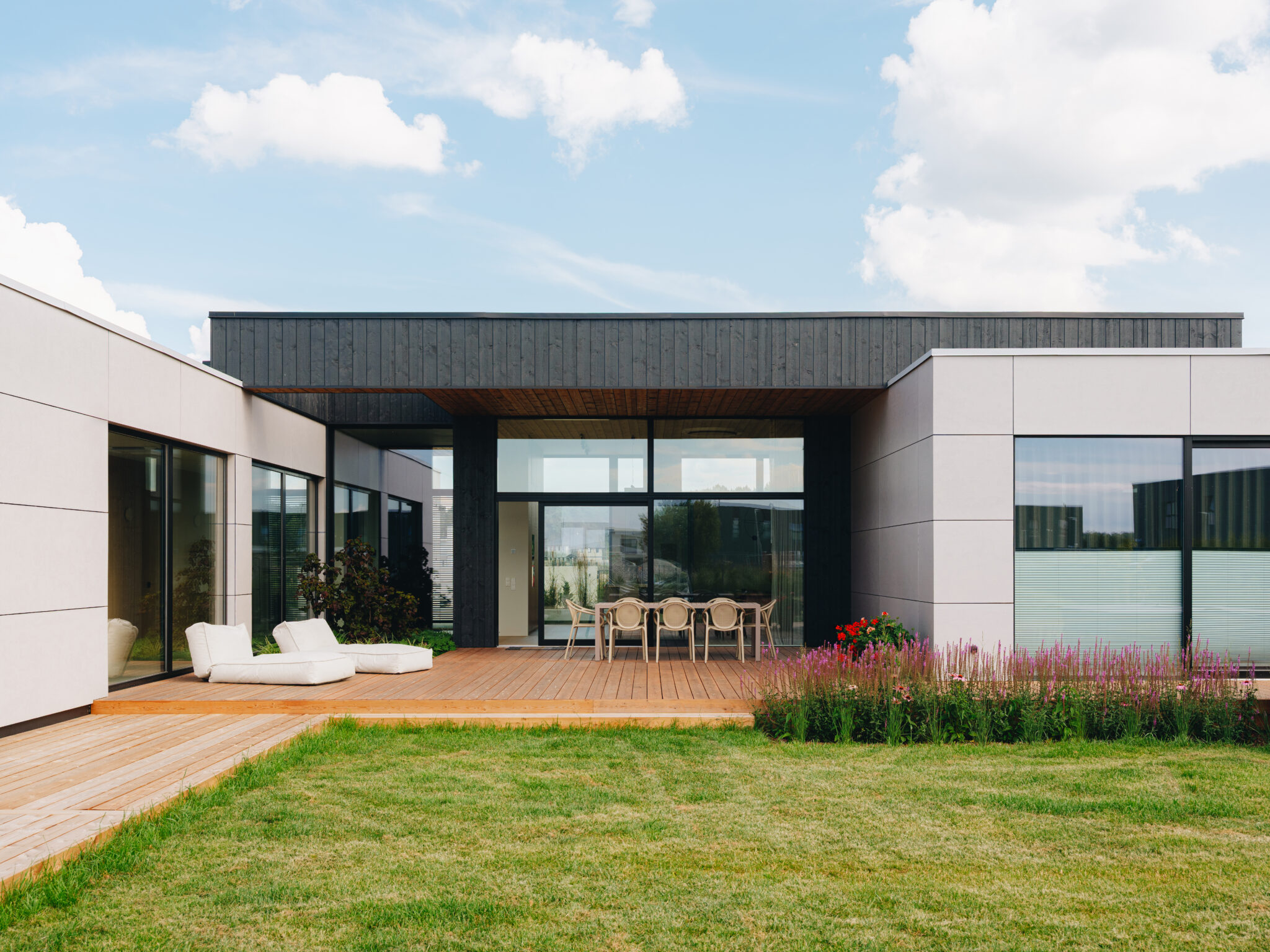
Happy Home gives a 50-year guarantee on the structures. That means the load-bearing structure in its intended use: the CLT walls, floors and roof structure. If a defect appears there that stems from the material, the production or our work, we repair it. Such a long promise is possible because cross-laminated timber is dimensionally stable and the house is built dry.
It does not cover natural wear, neglected maintenance such as blocked drainage or a roof left leaking, or alterations not agreed with us. The exact terms are in the contract, and they are worth reading before signing. When comparing builders, ask each what their guarantee covers word for word and for how long; the other criteria are in our article on prefab house manufacturers in Estonia.
5. What the construction guarantee and manufacturers’ guarantees cover
We give a 2-year guarantee on construction work. It covers the quality of the work: finishes, installations, joints and seals. After two years we come to inspect the house and carry out guarantee work where needed, and that inspection is part of our process rather than something the client has to remember.
The equipment, the heat pump, the ventilation unit and other technology, carries the manufacturer’s guarantee, and we provide after-sales service. Beyond that the builder has statutory liability for construction defects regardless of the contract.
Maintenance that extends the lifespan of a timber house
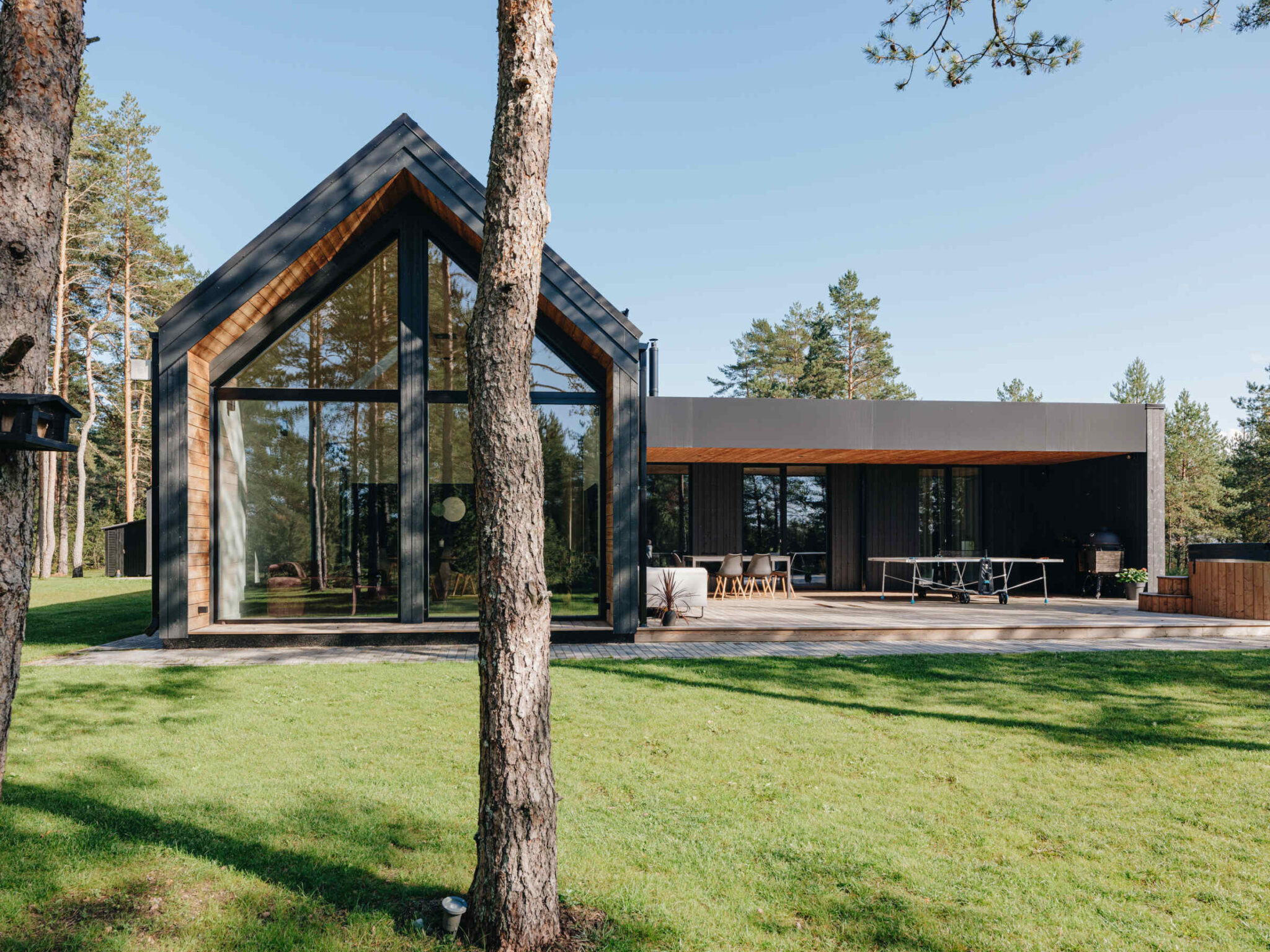
A timber house needs no special maintenance, but like any house it needs attention once a year.
- Rainwater system: gutters and downpipes clean, water reaches the drainage or away from the house.
- Drainage and the foundation perimeter: inspection wells clean, the ground sloping away, plants not covering the plinth ventilation.
- Roof: covering, penetrations and seals intact, especially after leaf fall.
- Facade: the surface treatment intact and the ventilation gap openings free.
- Windows and doors: seals intact, condensation does not collect on the frame.
- Ventilation: filters changed, the heat exchanger clean, the system running even when nobody is home.
We hand over the annual inspection list at handover. Keep a dated note of each check and any repairs: it shows that timber house lifespan has been actively looked after.
Timber house lifespan and the documents that keep the value of the house
The insurer, the bank and a future buyer all want to see the quality of the house proven on paper. The site log, the covered-works certificates, the measured airtightness, the energy label and a written construction guarantee hold the value of the house if it is ever sold.
The Estonian Woodhouse Association lists Estonian timber house producers, and the material is described in the Wikipedia article on cross-laminated timber. Our own completed houses are on the completed projects page; the oldest have stood for years and look like they did on the first day.
Summary
Timber house lifespan is decided by moisture control, not by the material, and a CLT house is built dry from the drainage to the ventilation, with a 50-year guarantee on the structures and a 2-year guarantee on the work behind it.
Come and see one of our sites under construction, or send the plot documents through the contact page, and we will show you the structure before the finishes cover it.